Clean on a compact rarely means what shoppers hope it means. Retailer seals, brand lists and federal rules use different definitions, while allergy data points to fragrance and preservatives rather than the marketing term. The safer purchase starts with other questions.
{.standfirst} On December 29, 2022, the Modernization of Cosmetics Regulation Act of 2022 was signed into law, described by FDA as the most significant expansion of FDA cosmetics authority since 1938. The date matters because shelves did not change overnight, but the paperwork behind foundation and pressed powder did.
A responsible person must now report a serious adverse event to FDA within 15 business days and include a copy of the label on or within the retail packaging. FDA defines serious adverse event to include death, life threatening experience, inpatient hospitalization, persistent or significant disability, congenital anomaly, infection, or significant disfigurement including serious and persistent rashes and significant hair loss. Manufacturers and processors must register facilities with FDA and renew every two years, and responsible persons must list each marketed product including ingredients with annual updates. MoCRA requires companies to ensure and maintain records supporting adequate safety substantiation, but neither the law nor FDA regulations require specific tests.
That last detail explains much of the confusion around compacts marked clean. The law asks brands to hold support for safety and to show ingredients and problems more clearly. Look closely and the law defines none of clean, hypoallergenic, fragrance free or for sensitive skin. FDA states there is no federal standard or definition governing use of hypoallergenic, fragrance free or for sensitive skin in the United States. A shopper reading clean is reading a retailer or a brand talking, not a grade stamped by Washington.
Retailer seals write their own rules
Sephora Clean at Sephora seal excluded sulfates, parabens, formaldehydes, oxybenzone, mineral oil, hydroquinone and triclosan, but permitted polyethylene glycols and synthetic fragrance under 1 percent. More than 50 brands and 2,000 products had garnered the Clean at Sephora seal at the time of the Beauty Independent report. “We plan to revisit, refine and help champion clean guidelines as the industry continues to evolve.” That was Sephora in statement to Beauty Independent.
Another retailer drew the line elsewhere. “To Credo, clean means prohibiting ingredients known to be harmful to our health and the ecosystem be they of natural, naturally-derived or even synthetic origin.” That was Mia Davis, director of mission at Credo, in statement. The two definitions agreed on caution and disagreed on particulars, for example on PEGs, dimethicone, mineral oil and synthetic fragrance under 1 percent. Retailer clean lists disagree with each other and with green beauty advocates on those points. For a buyer, the result is familiar. One foundation earns a seal in one door and loses it in another, while the formula inside the bottle stays the same.
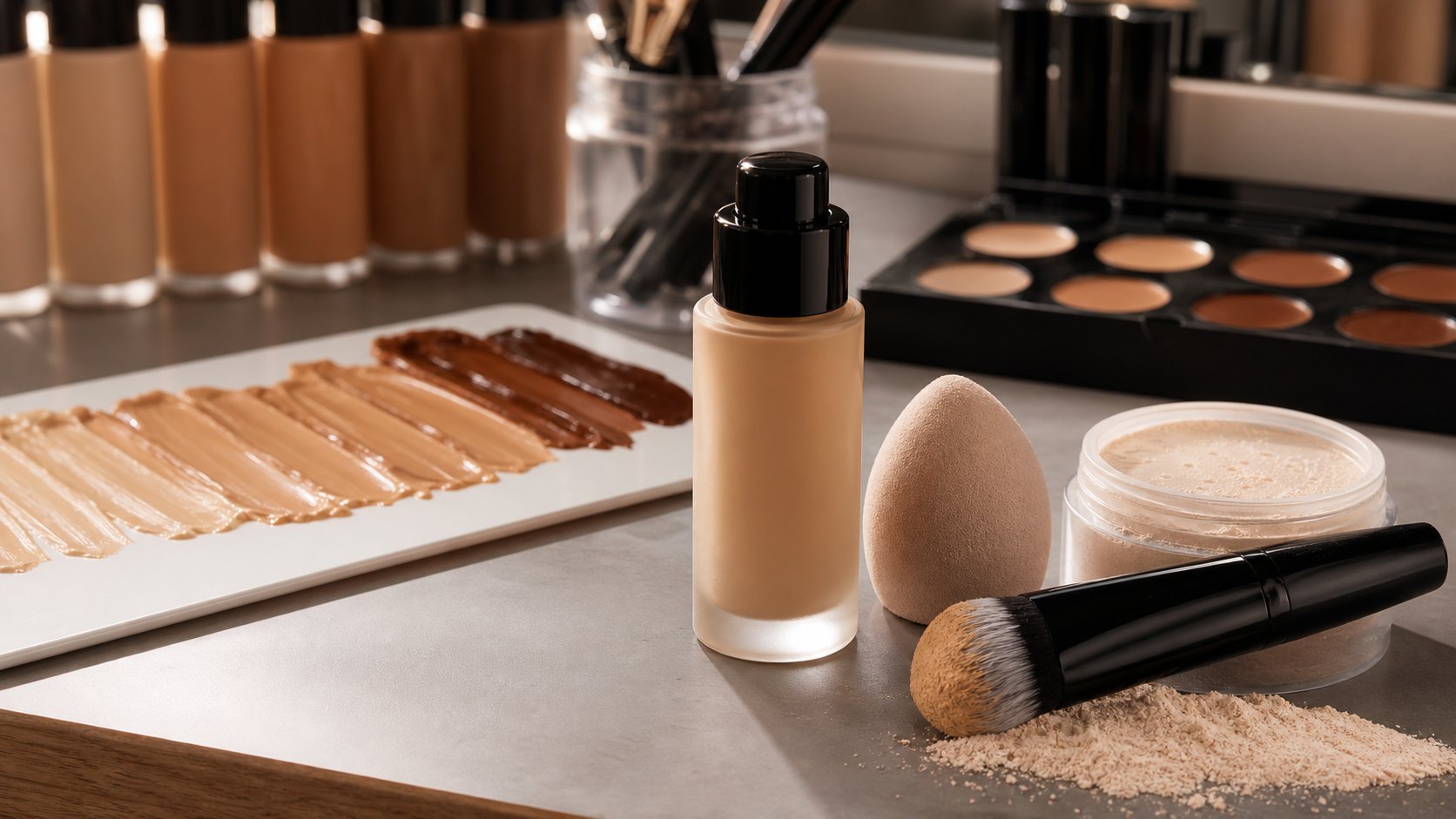
Sell through follows the seal, not always the shade work. A tight range with a seal can move faster than a broader range without one. Artists notice the gap at hour eight, when finish, wear time and transfer tell more than the front of the box. Pigment load and payoff matter for coverage, undertone matters for match, and shade extension matters for the customers who were left three shades short. None of those qualities is guaranteed by a free from claim.
A tight range with a seal can move faster than a broader range without one.
What allergy evidence actually supports
Fragrance remains the best documented cosmetic allergen, and labeling makes it hard to avoid by name alone. FDA says certain fragrance ingredients may be listed generally as fragrance or perfume without identifying specific ingredients. The perfume industry uses about 3,000 fragrance compounds, individual products may contain 10 to 300 compounds, and perfume extract may reach 60 percent fragrance. Face cream contains about 0.3 percent perfume, facial makeup about 1 percent, and perfume proper contains 15 to 30 percent perfume. A small percentage in makeup can still matter on reactive skin worn all day near eyes and mouth.
A Denmark study of about 10,000 eczema patients found 5.5 percent had a positive reaction to fragrance mix, most commonly to oak moss followed by isoeugenol. Most people tolerate perfumes without reaction even after continuous exposure, while a minority develop contact allergy, so risk is uneven across users. For wearers with sensitivity, that uneven risk makes sampling and wear time more useful than a seal. A foundation that looks right at application can still itch by afternoon, and only a full day test shows it.
Preservatives tell a similar story about swaps. The review states parabens are present in almost all 99 percent of leave on products and 77 percent of rinse off cosmetics at concentrations up to 0.8 percent, but are relatively weak allergens. Parabens are relatively weak allergens, while substitutes such as isothiazolinones can be more allergenic, so paraben free does not mean allergy free. A compact that drops parabens to earn shelf space may preserve with something more likely to sensitize. The label looks cleaner while the allergy profile grows less forgiving.
Natural origin does not settle the question either. One study identified 121 cosmetic ingredients marked as natural associated with contact allergy. Most natural extract testing was lab or in vitro work with limited clinical testing on human subjects, so benefit for acne or dermatitis is not proven. Mineral formulas appeal to sensitive skin wearers for simple reasons of coverage without added scent, yet controlled wear tests in sensitive skin wearers are still missing. Preference is real, proof is thin.
Labels that promise more than testing proves
The gap between label language and dermatology language shows up in moisturizer aisles and applies to base makeup too. A cohort study of the top 100 body moisturizers on Amazon, Walmart and Target found only 12 percent were free of North American Contact Dermatitis Group allergens. The same cohort study found 45 percent of products labeled fragrance free contained botanical fragrance ingredients and 83 percent marketed as hypoallergenic included at least one NACDG allergen. Botanical extracts can scent a formula while the front promises no scent. Hypoallergenic can suggest testing that federal rules do not require.
Breakouts add another layer of uncertainty. Whether comedogenic ingredients in makeup cause breakouts in normal use remains unanswered, since the provided sources focus on allergy rather than acne causation. Whether a specific clean compact or foundation is less likely to cause allergy, irritation or breakouts for a specific sensitive skin wearer is also unanswered. Under MoCRA it is not yet clear how complete makeup product listings and adverse event reports are, or what they show about foundation safety. Registration and listing create a paper trail. A paper trail is not a wear test across shades, skin types and climates.
That leaves three practical questions at the counter. What is fragranced, including botanicals and the word perfume in the ingredient list. What preserves it, since paraben free formulas rely on other systems with their own allergy records. What proves it suits reactive skin, beyond the words hypoallergenic or for sensitive skin. Doors and restocks reward the brands that answer clearly, with full lists, honest fragrance accounting and shade ranges that extend past the middle. Waitlists form around shades that match and formulas that last, not around seals alone. Dupes circulate when payoff is close enough and the price is lower, another sign that performance drives repeat buying.
Clean works as shopping shorthand for fewer contested ingredients. Clean does not work as a safety grade across retailers, brands and skin. The law now requires more registration, more listing and faster reporting of serious events, without defining the marketing word on the front. The evidence keeps returning to fragrance allergy and preservative allergy, where names hide, swaps carry tradeoffs and natural does not mean mild. The stronger habit is to read the back, test wear time, keep the receipt and ask those three questions before committing to the compact.

Whitney Doyle
Whitney runs the news desk and the kit guides at Gloss Report. She keeps one spreadsheet of every launch date, restock and shade extension of the year, and can usually tell you the week a blush sold out and the week it came back.
More from Whitney Doyle →