Mineral makeup left the loose powder era behind when pressed textures learned how to hold light. Early formulas mattified and set, later ones support glow and longer wear, and buyers prone to breakouts stayed for the simpler ingredient story. The win now belongs to shade range and finish rather than the word mineral alone.
In an 8 week trial with 61 participants treated with hydroquinone, sunscreen with iron oxides reduced Melasma Area and Severity Index scores by 75 percent versus 60 percent for UV only sunscreen.
That gap explains why a category once filed under 2000s trend is back on retail shelves and in artist kits. The number points to visible light, not only ultraviolet light, as part of pigment care. Mineral color now trades on that science, plus a gentler reputation and textures that no longer read dry by midday. The return looks less like nostalgia and more like repair work on formula, finish and packaging.
Early powder history set the terms. By the early 20th century makeup powders were used to mattify and reduce shine and to soak up excess oil and sebum. In the 1920s and 30s colored powders became popular, with common shades listed as White, Natural, Flesh and Rachel or Brunette. Powder became a setting staple in the 1980s and 90s, used to set makeup rather than conceal skin. The first mineral wave inherited that matte logic. Loose powder absorbed oil, scattered light and photographed softly. On dry or textured skin it could also sit visibly, catch on flakes and fade unevenly.
Modern mineral powders often use silicas, iron oxides and zinc oxides in place of ingredients like talc. Setting powder is traditionally made to soak up oil and often contains talc, and its oil absorbent ingredients can dry skin. Finishing powder is milled extremely fine to create an airbrushed finish and often contains hydrating ingredients that retain a luminous finish rather than a matte one. Pressed powder is milled and pressed typically by high heat and pressure, or by adding binding powders or a little oil. That last detail matters. Pressing changed application from a cloud of dust to a controlled layer. Binding powders and a little oil helped pigment lie flatter, which reads as glow rather than chalk.
What changed between dusty and dewy
The texture shift made mineral color compatible with simpler routines. A pressed mineral can act as light coverage, setting step and SPF support in one compact. Tinted balms and serum textures extended the same idea for buyers who want moisture first and pigment second. Fewer layers means fewer conflicts between primer, foundation, powder and sunscreen. For breakout prone and eczema prone buyers, that simplicity is the appeal, though it is unclear which buyers drove repurchase or whether those groups saw better clinical outcomes.
Trade language helps here. Payoff means how much color transfers in one pass. Finish means whether skin looks matte, satin or luminous after application. Wear time means how long that result lasts before oil, transfer or fading changes it. Early loose minerals offered soft payoff and matte finish with short wear time on dry skin. Pressed minerals, tinted balms and serum textures raised payoff control, moved finish toward satin and luminous, and improved wear time because the film is thinner and more flexible.
dermatology gives iron oxides a clear role. Iron oxides are classified into red iron oxide Fe2O3, yellow iron oxide FeOH3 or FeOOH, and black iron oxide Fe3O4. Mixed in cosmetic proportions, those three make the browns, beiges and deep tones that shade ranges depend on. They also filter visible light. Zinc oxide alone provides some attenuation in the 400 to 450 nm range of high energy visible light and works synergistically with iron oxide. A 2021 study using diffuse transmittance spectroscopy found formulations with red, yellow and black iron oxides blocked 71.9 percent to 85.6 percent of high energy visible light in the 415 nm to 465 nm range.
Shade range and glow now decide the reorder, not the mineral word on the front.
A comparative study of sunscreens with 4.87 percent and 27.25 percent iron oxide found they were significantly more effective in improving pigmentation than a mineral SPF 50 plus sunscreen of only zinc oxide and titanium dioxide in people with Fitzpatrick phototypes greater than type III. The finding lands on shade inclusivity. Deeper skin is more prone to visible pigment change from light exposure, and iron containing tints add protection where untinted zinc and titanium leave a gap. Review authors note of UV filters such as zinc oxide and titanium dioxide that “their ability to shield the skin from VL remains limited”. Iron oxides fill part of that gap while supplying color.
Ultraviolet cover still rests on zinc oxide and titanium dioxide. Titanium dioxide is more effective in UVB at 290 to 320 nm and zinc oxide in UVA at 320 to 400 nm, and their combination assures broad band UV protection. According to the United States Food and Drug Administration, protection against UVA should be at least one third of the overall sun protection factor. That rule shapes tinted SPF powders and balms more than marketing copy admits. A pretty tint without balanced UVA support is incomplete sun logic, however natural the wear feels.
Sensitive skin made the comeback stick
Mineral powders earned trust by leaving things out. Talc absorbs oil well but can dry skin. Bismuth oxychloride is described as a manmade powder from lead, copper and chloride that can cause itching and even rashes. Some brands built their point of difference around avoiding both, using silica and zinc based systems instead. Breakout prone buyers liked fewer oils and fragrances. Eczema prone buyers liked fewer potential irritants and lighter layers. Results were practical rather than dramatic: less midday tightness, fewer clogged looking pores at removal, easier reapplication over sunscreen.
Limits remain. The RMS Beauty team cautions, “Mineral powders can still be tricky.” Some powders can dry skin or increase oiliness, depending on oil absorbent load and skin type. Mineral does not guarantee safe, since bismuth oxychloride can irritate in susceptible users. Sunscreen review evidence that sunscreens prevent basal cell carcinoma and malignant melanoma is inconclusive, which keeps mineral SPF claims in the realm of supports rather than shields. Nanoparticle questions also stay open. Microsized titanium dioxide and zinc oxide have been increasingly replaced by nanoparticles under 100 nm to remove undesired opaqueness. Skin exposure to nanoparticle sunscreens leads to incorporation of titanium dioxide and zinc oxide nanoparticles in the stratum corneum. Both sunscreen nanoparticles induce photo cyto and genotoxicity and have been sporadically observed in viable skin layers especially with long term exposure and zinc oxide. Sources call for more stabilization and chronic exposure research, and they do not establish which coatings, doses and long term exposures are safe in daily mineral makeup.
That uncertainty has not stopped the format change. Serum textures suspend minerals in a more flexible film, which helps around the nose and mouth where powder once cracked. Tinted balms add emollience that supports a luminous finish on dry skin. Pressed compacts reduce over application, the classic cause of dry look and midday separation. For artists, sell through follows the same logic. A mineral compact that holds from call time to wrap with one blot gets reordered. A loose jar that looks good at hour one and pale at hour eight does not.
Packaging promises more than the bin allows
Low waste packaging became part of the second mineral story. Refillable compacts fit the keep the case, replace the pan habit. Fewer loose components and simpler formulas match the lower waste message. Sales data suggest interest without mass conversion. In the US refillable formats saw only 7 percent growth in launches between 2022 and 2024. Almost 70 percent of US consumers say in store refilling is inconvenient, while almost 50 percent of German consumers purchased a refill pack in 2024 but only 40 percent bought a refillable product. Convenience, hygiene worries, cost and weak recycling infrastructure limit adoption.
The wider packaging market shows why change is slow. A market report sizes global cosmetic packaging at USD 40.17 billion in 2026 and projects around USD 62.61 billion by 2035 at a 5.21 percent CAGR from 2026 to 2035. According to the EPA, approximately 70 percent of plastic trash from the cosmetics industry is not recycled and ends up in landfills. A refillable mineral compact helps at the margins. It does not solve collection and sorting. Brands that sell refills hardest tend to keep pan sizes stable, magnets standard and cases durable enough to survive a handbag year. Those details decide repeat purchase more than sustainability language.
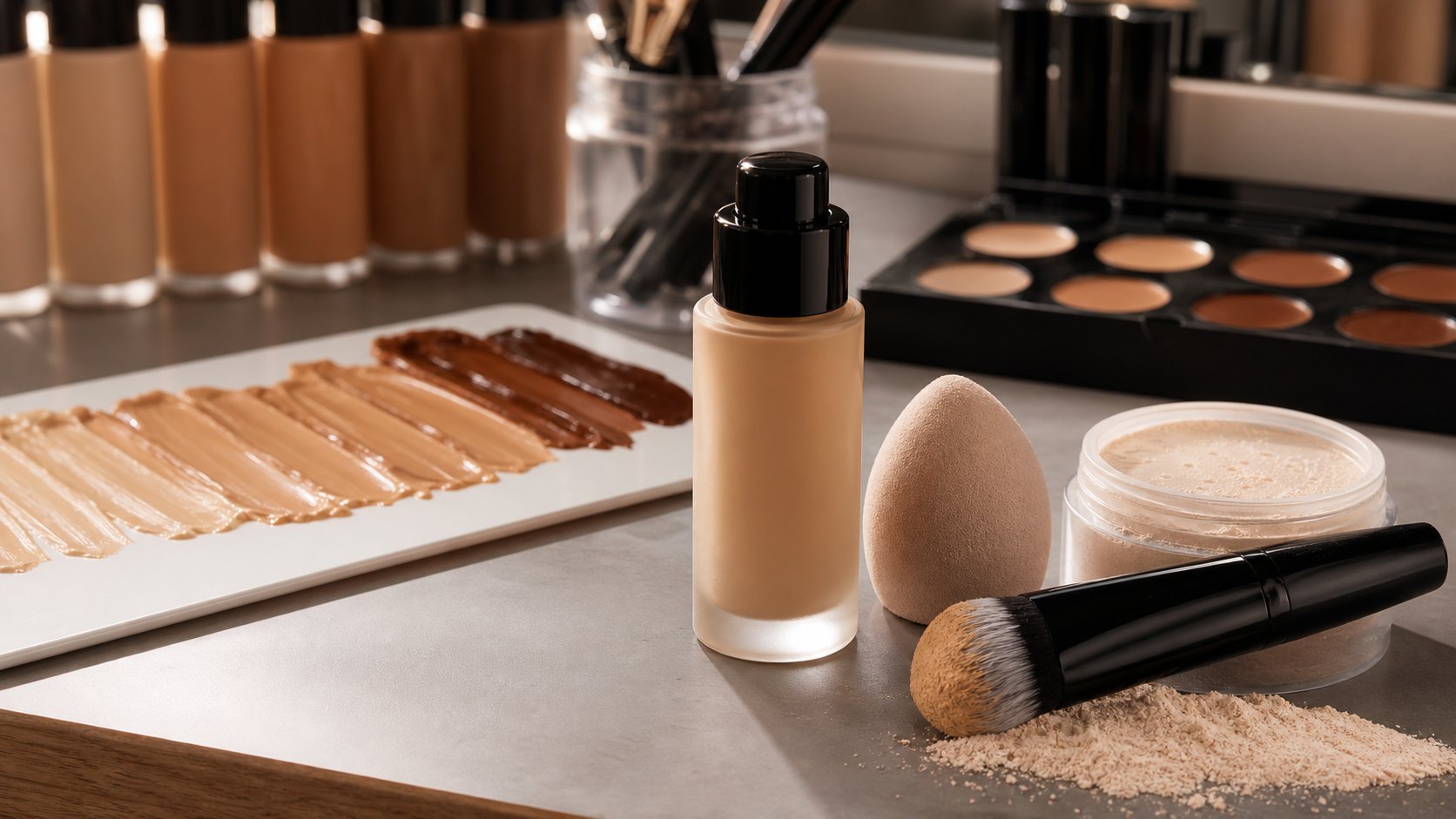
Shade range decides the rest. Early mineral lines often stopped where beige deepened into tan, with undertone options thin across the board. Undertone means the warm, cool, neutral or olive cast beneath surface tone. A line without that spread forces buyers to mix or to accept an ashen cast from untinted zinc and titanium. Iron oxides make deeper matches possible, but only if founders fund the extensions. Pigment load must rise without thickening wear. Transfer onto collars and phones shows faster on fabric, so low transfer matters for deeper shades.
The pattern behind the comeback is now clear. Sensitive skin buyers wanted fewer irritants and lighter layers. Pressed minerals and tinted balms delivered better finish and wear time. Dermatology supports iron oxides with zinc oxide for visible light and pigment concerns, and zinc with titanium for broad UV cover, with cautions on talc, bismuth and nano safety. Refillable packaging adds appeal but has not yet removed friction at the counter or the recycling bin. What pressed serums and tinted balms contain and how their shade ranges sell through is unclear, so judgment still rests on swatch, wear test and reorder behavior.
Mineral makeup returned because it solved real problems quietly and stopped asking dry skin to accept a dry finish. The next winners will be chosen the way color always gets chosen: an undertone that matches without mixing, a glow that lasts past lunch, a compact worth refilling and a formula simple enough to live with every day.

Heather Castellan
Heather looks after the brands Gloss Report works with and makes sure every sponsored page says so. She was a colour cosmetics buyer for seven years, which is where she learned how a shade range gets cut before it ever reaches the shelf.
More from Heather Castellan →