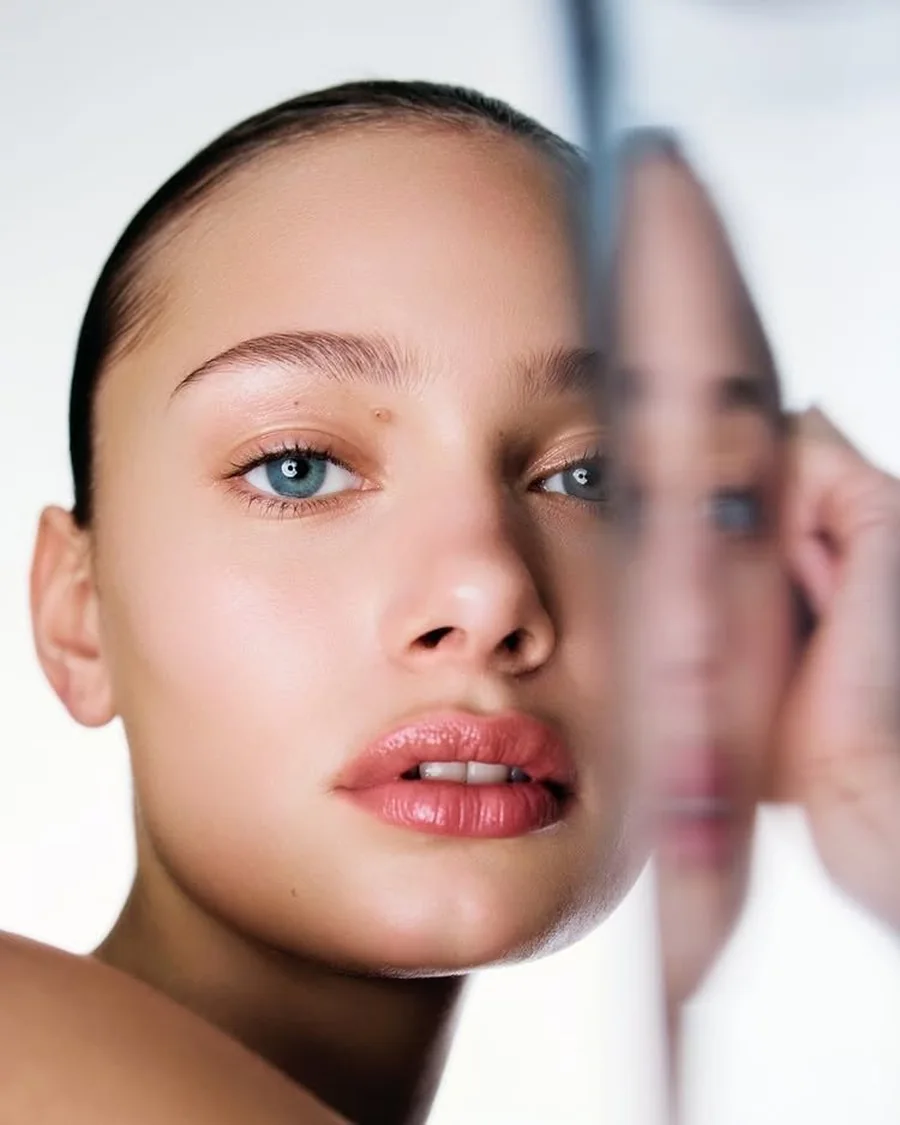
Most coverage fails because concealer is asked to do all the work alone. A thin corrector that cancels the colour first means less concealer after, which keeps skin looking like skin through hour eight. Learn the order and the textures and heavy base stops being necessary.
Start with colour, not coverage
Colour correcting uses tinted formulas to neutralise discoloration before foundation and usual concealer. L’Oreal Paris describes the logic as opposite colours on the colour wheel cancelling each other, which is why green sits opposite red and peach sits opposite blue. Project Vanity notes that correctors feel like primer and aim to prep the area so less foundation or concealer coverage is needed later.
That one fact changes the routine. Instead of layering more beige over purple or red, a sheer wash of the opposite tone lowers the contrast, then a small amount of skin tone product finishes the job. The result reads as even tone rather than makeup, and it holds longer because thin layers move less than thick ones.
Corrector helps most when discoloration shows through foundation. Think blue grey under eye circles, fresh red around a blemish, rosacea flush across cheeks, sallow yellow through the centre of the face. When skin looks fairly even after moisturiser and primer, several guides say to skip corrector and use less product for a natural finish. Minimal makeup days rarely need it.
Order matters here. L’Oreal Paris places colour corrector after skincare and primer and before foundation, then foundation to unify, then concealer to brighten and refine. BareMinerals gives the same golden rule in plainer terms, with primer before foundation and concealer after foundation to spot correct only where needed. Primer needs 30 to 60 seconds to dry before foundation so foundation adheres properly, and concealer goes on before powder so a light dusting can lock it in place.
Pick green, peach and lavender for the right concern
Green is for redness. L’Oreal Paris states green corrector is best for redness including pimples, irritation and rosacea because green neutralises red tones. Use it only on the red area, not the whole cheek, since green outside redness can leave a cast. A small brush gives more control than a doe foot around a blemish, and one thin layer is usually enough before foundation evens the rest.
Peach and orange are for blue, grey and brown toned darkness. The rule from L’Oreal Paris is about depth. Peach shades suit light skin tones for bluish circles and greyish spots, while orange shades are more effective on medium to deep skin. Both counter the cool tone that makes under eyes look tired, which lets the concealer on top stay closer to skin tone instead of going too light. On deeper skin, peach can look ashy, while orange melts in and then disappears under concealer.
Yellow sits between those jobs. L’Oreal Paris states yellow corrector balances purple discoloration such as bruises and violet toned under eye circles, with pastel yellow for fair skin and deeper golden yellow for medium to dark skin. If circles look more violet than blue, yellow often looks more natural than peach. If spots look grey after a breakout fades, a touch of peach or golden yellow can lift them before concealer.
Lavender is for dullness, not darkness. L’Oreal Paris states purple or lavender corrector brightens dull or sallow skin with yellow undertones and can be applied to chin, forehead or under eyes. Think of it as a light filter for areas that look flat or tired rather than a cover for a spot. Too much lavender reads chalky, especially on deep skin, so keep it sheer and central where light would hit. When the concern is strong redness or deep blue circles, green or peach will do more work.
Find tone and undertone from light to deep
Coverage looks wrong most often because undertone is wrong, not because depth is wrong. Guides advise staying in the same undertone family from foundation through concealer and corrector, so cool pink skin stays with cool leaning shades and warm golden or olive skin stays with warm leaning shades. A concealer that is light enough but too peach on cool skin can look orange by midday, while a neutral shade that is too pink on warm skin can look grey.
No single shade name works across light to deep skin because families matter more than personal matches. Vein, white paper, jewellery and foundation checks all help point toward cool, warm or neutral, but daylight tells the truth. e.l.f. advises swatching concealer on the lower cheek and neck for best match and avoiding hands or arms, which usually run darker or redder than the face. Blend a stripe near the jawline, step to a window, and check after a minute for oxidation, the slight darkening some formulas show as they set.
Ashiness and orangeness give useful clues. An ashy cast under eyes on medium to deep skin often means the concealer is too light or too cool, and switching to a deeper peach or orange corrector plus a closer skin tone concealer fixes it better than adding more lightness. An orange ring around a blemish often means the shade runs too warm or too dark for that spot. Carry the check to the neck so face and body meet without a line.
Maybelline advises having two concealer shades, one lighter and one darker, because daily sun exposure shifts skin tone and artists use multiple shades for different effects. That advice suits real life. Skin changes across forehead, centre and perimeter, and from June to January, so one tube rarely matches every job all year. Two close shades allow mixing and seasonal adjustment without buying a full range.
Choose shade and texture by job
Under eyes and blemishes need different things, which is why one concealer often disappoints in both places. For under eye circles, guides advise choosing a concealer one shade lighter than foundation, or one to two shades lighter while staying in the same undertone family. The lightness lifts shadow without needing thickness. No7 advises dotting a small amount and building gradually, with dots at the inner and outer corners blended outward for a lifted effect. e.l.f. warns that large triangles or many layers can look heavy, washed out or dull, so a few dots tapped in usually beat a full triangle.
Blemishes want a match, not brightness. Some guides advise an exact skin match for spots so the area does not draw light. Maybelline MUA Grace Lee offers the counter method behind many kits, which is “a slightly darker concealer when covering blemishes to block out the color of the pimple.” The reasoning is that red and purple show through light shades, so a slightly deeper tone blocks the colour first, then a lighter or skin tone shade blends the edge. Both approaches can work here, so treat depth as a tool. Try an exact match first on small or faded marks, and try the slightly darker first layer only where red still shows through.
Texture should follow the area. e.l.f. advises dry skin suits a hydrating creamy concealer with satin finish, while oily or combination skin suits a long wear matte option. The under eye area is thinner, drier and more prone to creasing, so creamy and flexible formulas settle less into lines. Blemishes and the T zone often do better with longer wear textures that resist oil and transfer, which is trade language for makeup moving off the face onto fingers, masks or collars. Pigment load, the amount of colour in the formula, matters too. High pigment covers with less layering, which helps both areas stay thin.
Sensitive skin needs a narrower edit. Healthline dermatology guidance says people with eczema can generally wear makeup except during a flare up, when makeup should be paused until symptoms subside. Dermatologists advise eczema prone skin to choose hypoallergenic or sensitive skin formulas and cream and mousse formulas instead of powders, and to avoid fragrances, alcohol based gels and harsh preservatives. Helpful ingredients listed for eczema prone skin include hyaluronic acid, glycerin, ceramides and niacinamide to support hydration and barrier function. Where the evidence is mixed, say so plainly. “Thick layers of makeup are not helpful for maintaining a healthy skin barrier,” says Emily Wood, MD, board certified dermatologist, which supports the thin layer method on every skin type. What the evidence does not show is whether green, peach or lavender causes irritation or breakouts on acne prone or eczema prone skin, so patch testing and simple formulas remain sensible.
Apply in order and set without creasing
Prep decides how concealer sits at hour six. Start under eye prep with eye cream and primer, since e.l.f. notes drier eye areas are more sensitive and prone to creasing. Let skincare and primer set rather than rushing. BareMinerals advises that 30 to 60 second pause before foundation, and the same patience helps concealer grip instead of sliding.
Work in the order the formulas were designed for. Skincare, eye cream where needed, primer, colour corrector only where discoloration is strong, foundation to unify, then concealer to brighten and refine. No7 advises blending with light tapping using ring finger, brush or damp sponge and avoiding dragging or rubbing especially under eyes. Tapping presses product into skin while dragging moves it off the spot that needs it. Fingers warm cream and work well for small areas, a damp sponge sheers edges without lifting coverage, and a small flat brush places corrector neatly on redness.
Use less than feels necessary at first. Dot, tap, check in daylight, then add only where darkness remains. No7 advises for blemishes to apply concealer directly on the area, let it sit a few seconds, then blend around the edges rather than across the centre. That pause lets the formula set slightly so blending the edge does not wipe away the middle. Under eyes benefit from the same restraint, with blending outward from the inner and outer corners.
Set lightly and only where needed. BareMinerals advises applying concealer before powder and lightly dusting powder after concealer to lock it in place. Press a small amount with a fluffy brush or puff on areas that crease or turn shiny, and leave drier areas alone. Powder setting is advised to lock concealer, but eczema guidance warns powders can worsen dryness or draw attention to texture, so cream and mousse textures plus minimal powder suit that skin better. Too thick or too matte formulas may crack on dry under eyes while too dewy formulas may move on oily spots, so the same long wear product may not suit both areas.
Removal matters as much as application for breakout prone and eczema prone skin. Dermatology guidance advises thin layers partly because they are easier to remove without rubbing. Take makeup off gently at night, clean tools often, and pause active coverage during an eczema flare until symptoms subside. Sell through and waitlists tell part of the story on the retail floor, but wear panels and artist kits agree on the rest. Thin, placed, tapped and lightly set coverage lasts better than a heavy base.
The checklist
Sources and further reading
- How to Choose Concealer Shades by Skin Tone - Maybelline · maybelline.com
- How to Choose a Concealer Shade for Your Skin Tone · elfcosmetics.com
- Color Corrector Guide: How To Color Correct Dark Spots, Redness, and More · lorealparisusa.com
- Primer vs Foundation vs Concealer: What Order Should You Apply Them In? · bareminerals.com
- What to Know About Makeup for Eczema-Prone Skin · healthline.com
- How to Prevent Concealer Creasing: 5 Pro Makeup Tips · elfcosmetics.com
- How to Apply Concealer Like a Pro · us.no7beauty.com
For information only, not medical advice. Shade and wear notes reflect our testers' skin; patch test anything new, and check the full ingredient list if you have allergies or sensitive skin.

Kendra Pruitt
Kendra produces the founder interviews at Gloss Report: the research, the question lists, the follow-ups. She spent five seasons assisting session artists backstage in New York, so her first question is usually about wear time under hot lights.
More from Kendra Pruitt →