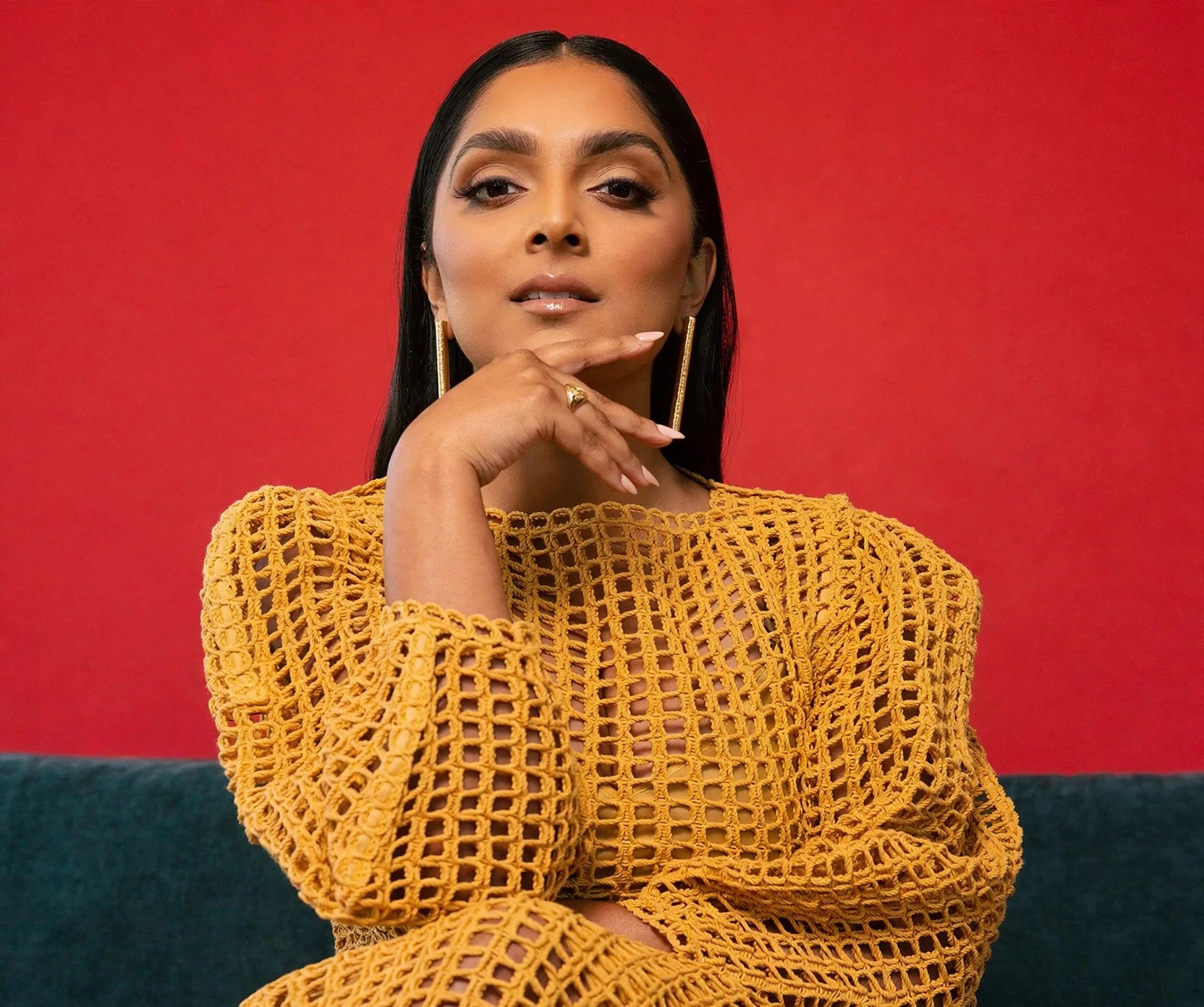
Live Tinted began as a platform for voices left out of beauty, then became a complexion brand with the same brief. Founder Deepica Mutyala talks colour correcting, mineral SPF without cast and why deeper tones come first in every formula she makes.
There is a specific kind of beauty founder who starts with proof, not a plan. Deepica Mutyala had it on camera. A video showing red lipstick used to cancel dark under eye circles passed 10 million views and put her on the Today Show and Dr. Oz within days. She was a Birchbox manager at the time, a lifelong makeup watcher who kept up with trends and looks.
In January 2018 she started Live Tinted as a digital platform for beauty and culture voices that were underrepresented. In May 2019 the first product followed, the Huestick, an eye, lip and cheek multistick that balances tone and nods directly to that viral trick. It sold out almost immediately against a waitlist of more than 10,000 people. The mission has stayed steady since: change the beauty narrative and celebrate beauty for all tints, with deeper skin tones as priority.
What others miss is how literal that priority is. Shade range here is not an extension story. It is the formula story, from undertone and pigment load to finish and wear time. In conversation Mutyala is warm, earnest and community minded, close to the group she calls TintFam. She keeps the language plain. She says the brand will always keep it real, and will always be honest.
Your video using red lipstick to cancel dark circles passed 10 million views and led to the Today Show and Dr. Oz within days, with Glossy dating it 2014 and your site noting 2015. What did that response teach you about what was missing for deeper tones?
Thank you for having me. I started as someone who loved to play with makeup and kept up with every trend and look. I filmed that video because nothing in my kit did what I needed under my eyes. Concealer sat grey or ashy. Corrector shades skipped my undertone entirely. Red lipstick worked because the pigment was strong enough to neutralise the blue brown darkness first, so concealer had less to cover.
The response told me I was not alone. Messages came from women across tones who had been told to wear three shades lighter or to skip corrector altogether. That is why I say I did not want anyone to grow up feeling like they need to be someone else to be beautiful. We should all feel beautiful and represented just the way that we are, and that inspired me to start my own brand. I have loved this industry since I was a little girl, and every part of my work since has pointed toward building this brand with community at the centre.
You started Live Tinted in January 2018 as a platform, then launched Huestick in May 2019 to a waitlist of more than 10,000 that sold out almost immediately. Why build community before product, and what did that order change?
I knew product would fail if we guessed at need. The platform let us listen first. Women shared shade frustrations, photos in bad retail light, stories about being matched too light or too warm. We learned which undertones were skipped, which textures clung to dry patches, which finishes faded by hour six. That gave us a clear brief for the first formula.
Starting with community also set accountability. Our tagline is dedicated to celebrating all complexions, and our promise is to change the beauty narrative and celebrate beauty for all tints. That is easy to print and hard to do. When the Huestick sold out, it was not because of hype. It was because more than 10,000 people had already told us what they wanted balanced, not masked. We made an eye, lip and cheek multistick that balances skin tone, and we made it with deeper tones as priority from the first batch.
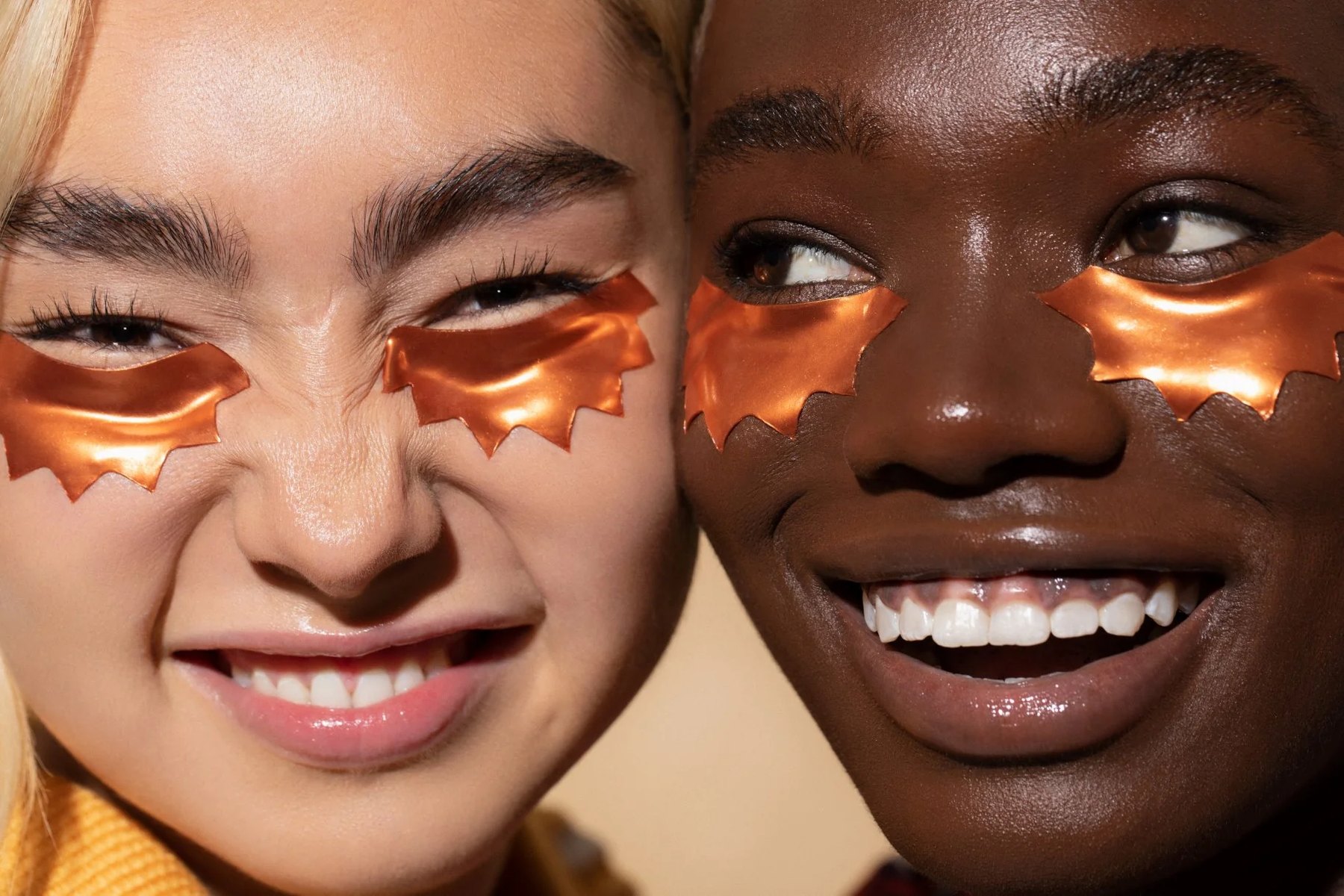
Your About page says the brand is formulated with deeper skin tones as priority and speaks to the TintFam community. What does priority mean in the lab when most brands treat range as a later step?
Priority means we do not formulate for light and adjust down. We start with undertone depth. Many complexion formulas fail on deeper skin because pigment load is low and base fillers run chalky. The result looks flat or grey in daylight, even if it swatches well indoors. We test payoff, which is how much colour shows in one pass, and wear time across oils and humidity. We check transfer, which is how much moves to phones and collars.
It also means shade logic comes early. Flexible coverage only works if undertone is right. A neutral deep is not a warm deep darkened down. It has its own balance of red, yellow and brown. We swatch on real skin in daylight, not only in the lab. We keep listening to TintFam because they catch what a shade wall misses. We will always keep it real, and we will always be honest about where we are and what still needs work.
The Huestick is an eye, lip and cheek multistick that balances skin tone and nods to your viral video. How should someone use it for colour correcting without ending up heavy?
Think of it as balance first, coverage second. I use a small amount where darkness sits, usually the inner corner and fanned slightly outward, then press and blend with fingers. Warmth from fingers melts the stick so it sheers out. If you swipe thick layers, any corrector will look heavy. If you press thin layers, the red orange base neutralises darkness and lets you use less concealer on top.
On lips and cheeks I use what is left on fingers. The same tone that corrects under eyes warms the face when sheered. That multitasking was intentional. The first product had to honour the video without requiring a full kit. One stick, light pressure, blend well, then add skin tone coverage only where needed. For daily wear that keeps texture skin like. For evening I layer a second thin pass only in the deepest area, never across the whole under eye.
Balance first, coverage second. A thin pressed layer does more than a thick swiped one.
Deepica Mutyala
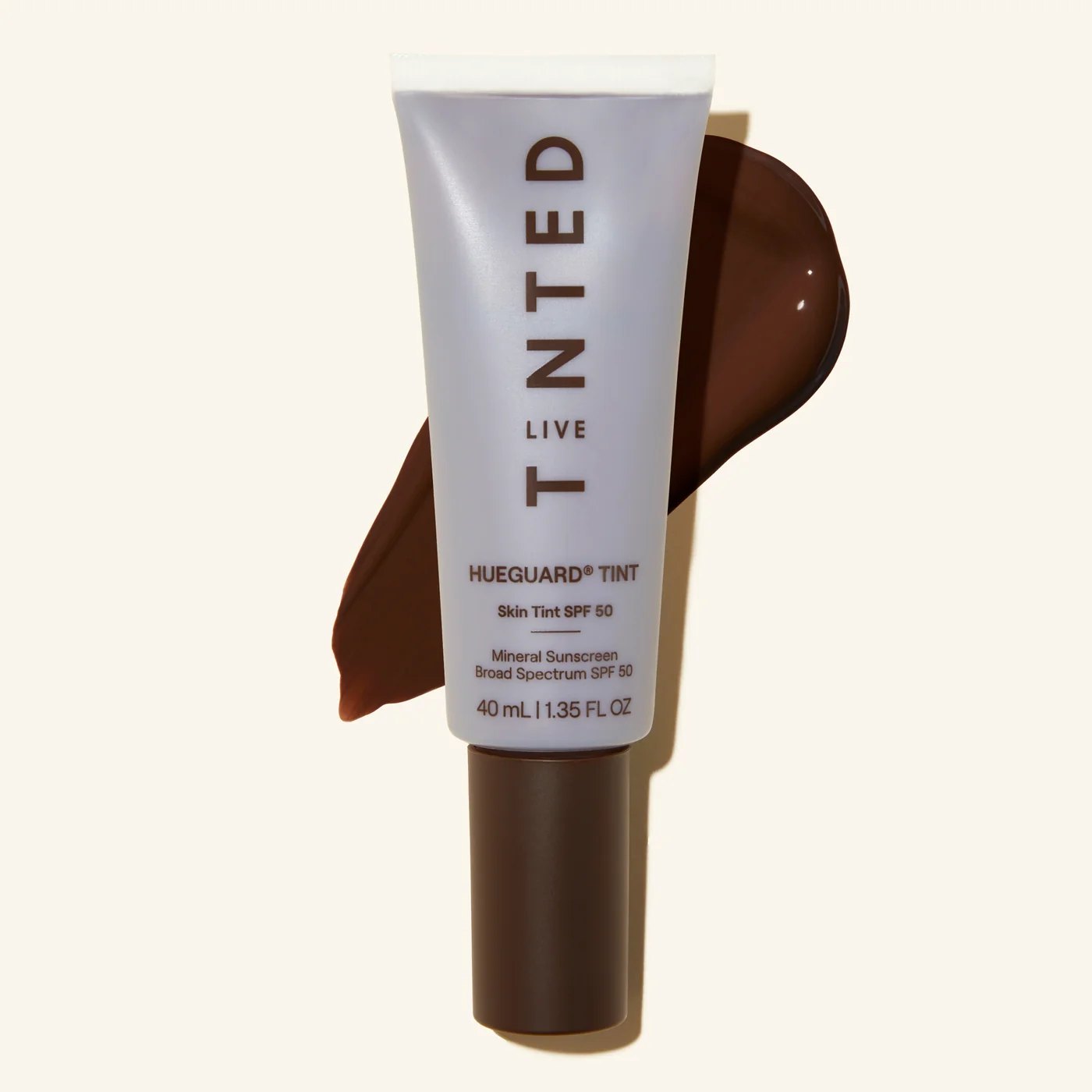
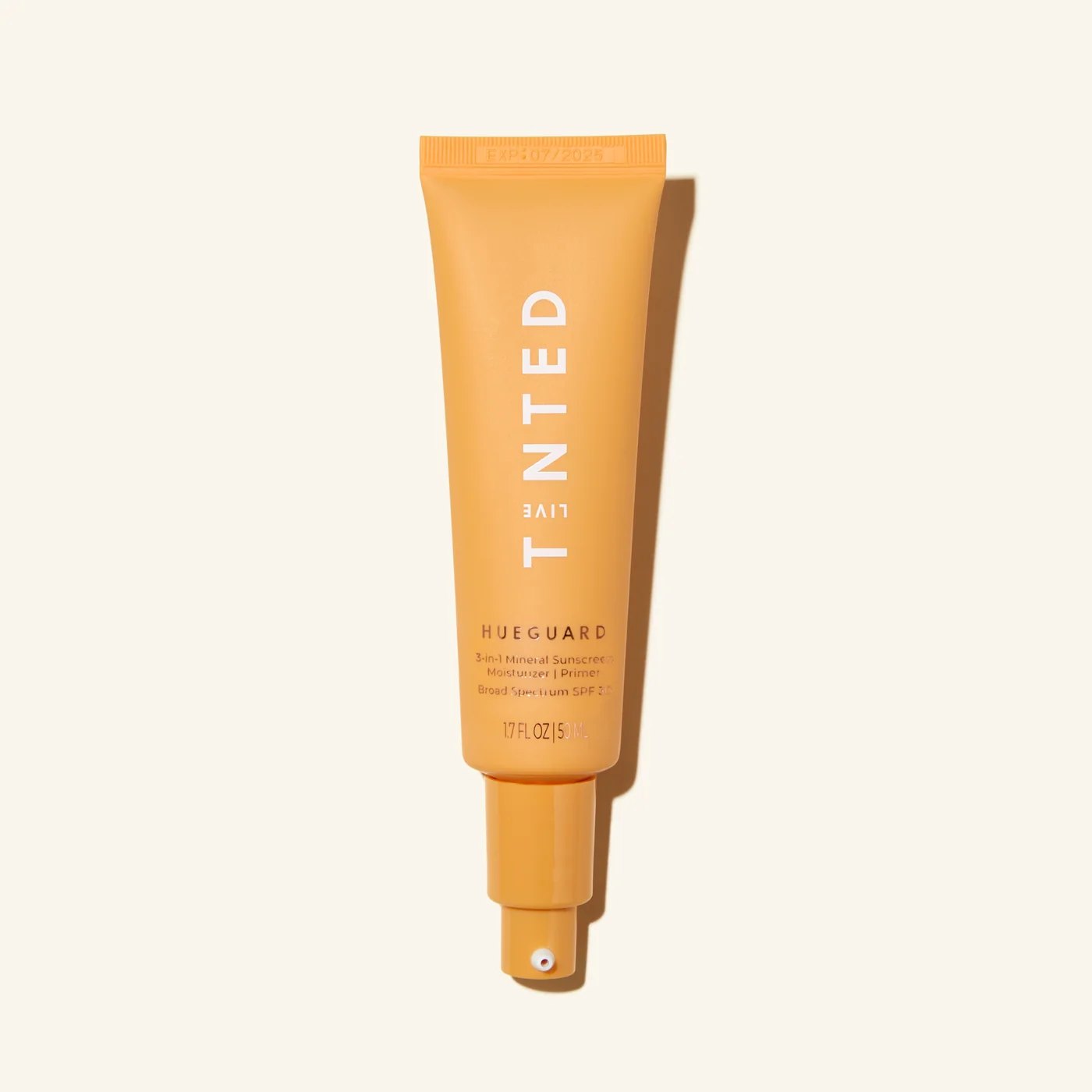
HUEGUARD is now a lightweight mineral SPF 50 Skin Tint with flexible, light to medium buildable coverage in 13 shades from Fair to Deep, $42 for Original and $19 for Mini, applied with fingers or sponge. How did you keep a zinc SPF 50 wearable on deeper tones?
Mineral SPF has a deserved reputation for cast. Zinc sits on skin to scatter rays, which is protective and also why older formulas turned lavender grey on deeper tones. We knew a mineral sunscreen for all tints had to solve that in formula, not in marketing. We worked with zinc oxide at 9.5 percent plus iron oxides for tint, with supporting ingredients including hyaluronic acid forms, allantoin, bisabolol, sea buckthorn seed oil and tocopherol.
Coverage is light to medium and buildable, so undertone can stay true while you layer. I apply with fingers or a sponge and layer only where I want more evenness. Fingers shear it fastest. Sponge gives a softer finish around the nose and mouth. Thirteen shades from Fair to Deep is a start, not a finish. The goal was a skin loving texture that protects at SPF 50 and still looks like skin at hour eight, without chalk or pilling under makeup.
Hueglow is described as a serum style highlighter, priced at $34 when you spoke about it in 2022. Where does glow sit in a Live Tinted routine built around corrector and tint?
Glow comes after balance. Once tone is evened with Huestick and Hueguard, most people need less highlight than they think. I like glow where light hits naturally, tops of cheekbones, brow bone edge, bridge centre. The serum texture matters because it can melt into tint without lifting it. Press, do not drag. Drag moves coverage. Press keeps it.
Finish is part of shade matching. A tint that is right in matte light can read flat by midday if skin oils break through unevenly. A controlled glow keeps dimension without adding coverage. I tell TintFam to start sheer. You can add a second press on cheekbones for evening, but keep the centre of the face calm. That keeps flashback down in photos and keeps the complexion reading as skin, not layers.

Your About page lists clean, vegan, cruelty free and carmine free formulas with hyaluronic acid and vitamins C and E plus squalane, and a refusal of chalky, underperforming or unstable formulas for deeper complexions. What tradeoff was hardest to hold?
Clean without cast is the hard line. Mineral formulas can feel dry or pill when you push pigment to fix cast. Clean bases can separate or fade fast if oils are not balanced. Carmine free reds and stable browns are also harder to hold across light and heat. We chose to reformulate rather than ship something that looked good in the studio and grey by lunch.
Hyaluronic acid forms, vitamins C and E and squalane support a comfortable wear that helps makeup sit well. They do not change skin structure. They help with the appearance of smoothness and hydration, which matters for how tint reads. Our stance is simple. We make makeup that respects sensitive skin and deeper tones at once. If a clean swap dulled payoff or shortened wear, we kept working. TintFam notices finish at hour eight more than any claim on the front label.
You raised a seed round of more than $3 million led by Montage Ventures, then a $10 million Series A in March 2023 tied to Ulta Beauty expansion, with Target and Sephora Canada also named in coverage and a further round reported in January 2026. What did wider doors teach you about what actually sells through?
Doors teach speed. A launch can sell in, which means retailers buy it, without selling through, which means customers rebuy it. Complexion lives or dies on rebuy. We watch which shades move first by region, which need education at the counter, which get returned for undertone mismatch. That is more useful than a single sellout headline.
Ulta, Target and Sephora Canada each have different testers, lighting and staff routines. We learned to support shade matching with clear swatches across skin tones and simple language for undertone. Sell through improves when staff can say this shade suits neutral deep with golden balance, not just deep. Funding helped us staff that work and deepen inventory where demand was real. Growth for us is measured in restocks and shade loyalty, not only in new doors.
You have said your dream is that when your kids are growing up this is just the standard with no conversation needed, and that when people think of Live Tinted 10 years from now they think of complexion. What does complexion mean for the next shades you make?
Complexion means the whole face works together. Corrector, tint and glow should share undertone logic so mixing is easy. My dream is that when my kids are growing up, this is just the standard, with no conversation needed around who is included. Inclusion should be the default formula brief, not a limited shade extension months later.
When you think of Live Tinted 10 years from now, I want you to think of complexion done carefully for all tints. That means more depth in the middle shades where many ranges gap, clearer undertone naming, and textures that hold up to sweat, long days and real light. We will keep listening to TintFam and keep shade discipline tight. A smaller careful range that matches well will always beat a large range that matches poorly.
Closing note from the desk
What stays with us after this conversation is Mutyala clarity about order. Community first, then formula. Balance first, then coverage. Undertone first, then shade count. That sequence shows in products that try to do less and match better, from a multistick rooted in a real trick to a mineral tint that takes cast seriously.
Live Tinted set out to change the beauty narrative and celebrate beauty for all tints, with deeper tones as priority and honesty as method. In a category crowded with claims, its plain test still stands: does the shade match in daylight, does it hold to hour eight, and does the customer see herself in the range without adjustment.
Product spotlight
HUEGUARD Skin Tint SPF 50 Mineral Sunscreen Broad Spectrum, Original, $42. A lightweight mineral skin tint with SPF 50 and flexible light to medium buildable coverage. For daily tone evening and sun protection in one step. Apply with fingers or sponge and layer where needed.
HUEGUARD Skin Tint SPF 50 Mineral Sunscreen Broad Spectrum, Mini, $19. The same mineral tint formula in a small size for trial or travel. For testing shade and texture before committing to Original. Apply with fingers or sponge, sheer out edges and build coverage lightly.

Whitney Doyle
Whitney runs the news desk and the kit guides at Gloss Report. She keeps one spreadsheet of every launch date, restock and shade extension of the year, and can usually tell you the week a blush sold out and the week it came back.
More from Whitney Doyle →