A customer wrote in to say her old vegan lipstick left lips tight and dry, then found she could wear one Axiology Balmie on lips, lids and cheeks without a tube in sight. That note captures why the brand stuck. This is a conversation about base first formulas, paper wrappers and what sells when plastic leaves the room.
The note arrived the way many Axiology notes arrive. A shopper who had tried vegan lipstick before and felt that tight, dry pull by noon. Then she tried a paper wrapped crayon from Bend, Oregon and used the same stick three ways. Lips, lids, cheeks. No tube, no cap, no mirror bag clutter. She kept the little red case and ordered another shade.
Ericka Rodriguez started Axiology in 2014 after learning in 2013 that her makeup had been tested on animals. She was vegan for years and vegetarian most of her life. She could not find cruelty free, vegan, natural color for her age group that felt good. So she started in a tiny New York kitchen with YouTube videos and library DIY books, working for months on a balm base before she touched color.
What the brand is now is plastic free color made in house in Bend. The hero is the 3 in 1 Balmie crayon, nine ingredients, matte and long wearing, wrapped in paper and stored in a recyclable red case. The quieter seller alongside it is the creamier Multi Stick family for drier skin. What others miss is how much of the business is manufacturing discipline. Rodriguez still pours in house, which lets her mix and match shades on her own terms while larger launches would force outside minimums.
You launched six shades of ten ingredient lipstick on Etsy in November 2014 after two years of kitchen trials, working from a 100 square foot bedroom office with one hire. What did those first buyers teach you that a lab report could not.
Thank you for having me. I started playing around with formulations in my own kitchen just for fun. I always knew that I wanted to be an entrepreneur, so I went to school for business administration and concentrated in entrepreneurship. But this was personal first. I had done some research about animal testing in the cosmetics industry in the United States, and I was honestly horrified. Running a plastic free, vegan beauty company was never really in my plans, but in 2013 when I learned that all of my makeup had been tested on animals, I decided to start making my own vegan lipsticks in my tiny kitchen.
It was really a lot of trial and error. I started with making a lip balm. I did not even play with color for the first couple of months, I was focused only on honing in on the base recipe. I would try a vegan lipstick and it would make my lips feel tight and dry. That was the bar I had to clear. Smooth and buttery, but still vegan and cruelty free. Etsy buyers told me fast if I cleared it. They wrote about comfort, about wear, about whether the bullet dragged. That feedback shaped the next pour more than any theory.
You spent months on the balm base before color and rejected fruit and vegetable pigments for other natural pigments. Why did base come first, and what made a pigment make the cut.
It is important to me to take the same care in choosing products for my face as I do with the foods that I eat. I wanted simple ingredients I could pronounce. With lipstick, if the base is drying or gritty, no shade will save it. So I stayed with balm until the slip was right. Then I tested color for payoff, which for us means true color in one swipe, and for stability. Finish matters too. By finish I mean whether it looks matte, dewy or satin once it sets.
Fruit and vegetable pigments sounded lovely and on brief. In practice they shifted, faded or turned. I needed natural pigments that held their undertone, which is the warm, cool or neutral cast underneath the shade, through wear. We landed on mineral pigments like iron oxides and titanium dioxide with mica. They gave us consistent tone and coverage without animal ingredients. That choice still guides us. Fewer ingredients, each one earning its place.
Your Sephora online order in 2017 was worth about 75 percent of your prior year sales and forced a fast scale up from home making. What broke first, and what did you keep in house after.
Scale finds every weak point. We went from home making with a tiny team to needing real systems. Sourcing, pouring, labeling, shipping. Everything had to grow at once. What broke first was time. There were not enough hours to pour, pack and answer customers. We moved to our Bend facility and built process around small batch pouring, which is still how we work.
We are very lucky because we still manufacture in house and are able to mix and match on our own terms. That matters for shade range, which is the full set of shades offered, and for shade extensions, which are new shades added to an existing range. We can test a new undertone without betting the company on a huge run. Doors, which is how the trade counts retail locations, came later with Credo and then 100 Ulta stores. Each door taught us about sell through, which is how much of what shipped actually sold to shoppers. But keeping pouring close kept quality close.
In April 2020 you launched the Balmies quartet for Earth Day to salvage a pandemic expansion, then in 2022 you dropped 50 percent post consumer recycled plastic tubes to go plastic free except serum droppers. Why walk away from recycled plastic when most brands call that enough.
The beauty industry creates 120 billion units of packaging waste every year. That number sat with me. Recycled tubes were better than virgin plastic, but they were still tubes and caps that live on. I did not want to keep making waste and calling it progress. So we moved Balmies to a tubeless crayon. You tear the paper as you use it. You store the nub in a small red case that is recyclable.
The tradeoff was real. Tubes are familiar. People know how to twist and click. Paper asks for a new habit and a little learning. Blend with fingers or a brush, tear, store. But the payoff, in color payoff and in waste terms, was worth explaining. Plastic free beauty became the tagline because it is the clearest promise. Join us in making the switch. For shoppers who want eyes, lips and cheeks from one stick, the format finally matched the message.
The Balmie Single is 18 dollars for 0.12 oz with nine ingredients built on castor oil, kokum butter, sunflower oil, sunflower seed wax, hemp seed oil, elderberry extract, plum seed oil, vitamin E and neem oil. How does that base wear across three zones by hour eight.
That nine ingredient base was built for matte color that lasts without feeling tight. Kokum butter and sunflower seed wax give structure. Castor and sunflower oils give slip. On lips it sets to a soft matte with lower transfer, which means less color moving to cups or masks, than a glossy stick. On cheeks it sheers well with fingers because skin warmth melts it. On lids it needs a light layer. Oily lids will want a primer or a thin set, drier lids can wear it straight.
Wear time, which is how long color looks as intended before fading or creasing, depends on zone. Lips see food and talk. Cheeks see sun and touch. Lids see oil. I tell people to press, not swipe, for the second layer. For Balmies, which suit oily skin or face oil users, thin layers hold best. For drier skin, our Multi Sticks with coconut and avocado oil plus soy butter give more cushion. Same idea of one stick for three places, different finish and feel.
If the base is drying or gritty, no shade will save it.
Ericka Rodriguez
You position Balmies for oily skin or face oil users and Multi Sticks for drier skin. How should a shopper choose between Cherry, Nude Plum, Strawberry and Raspberry if she wants one stick for workdays.
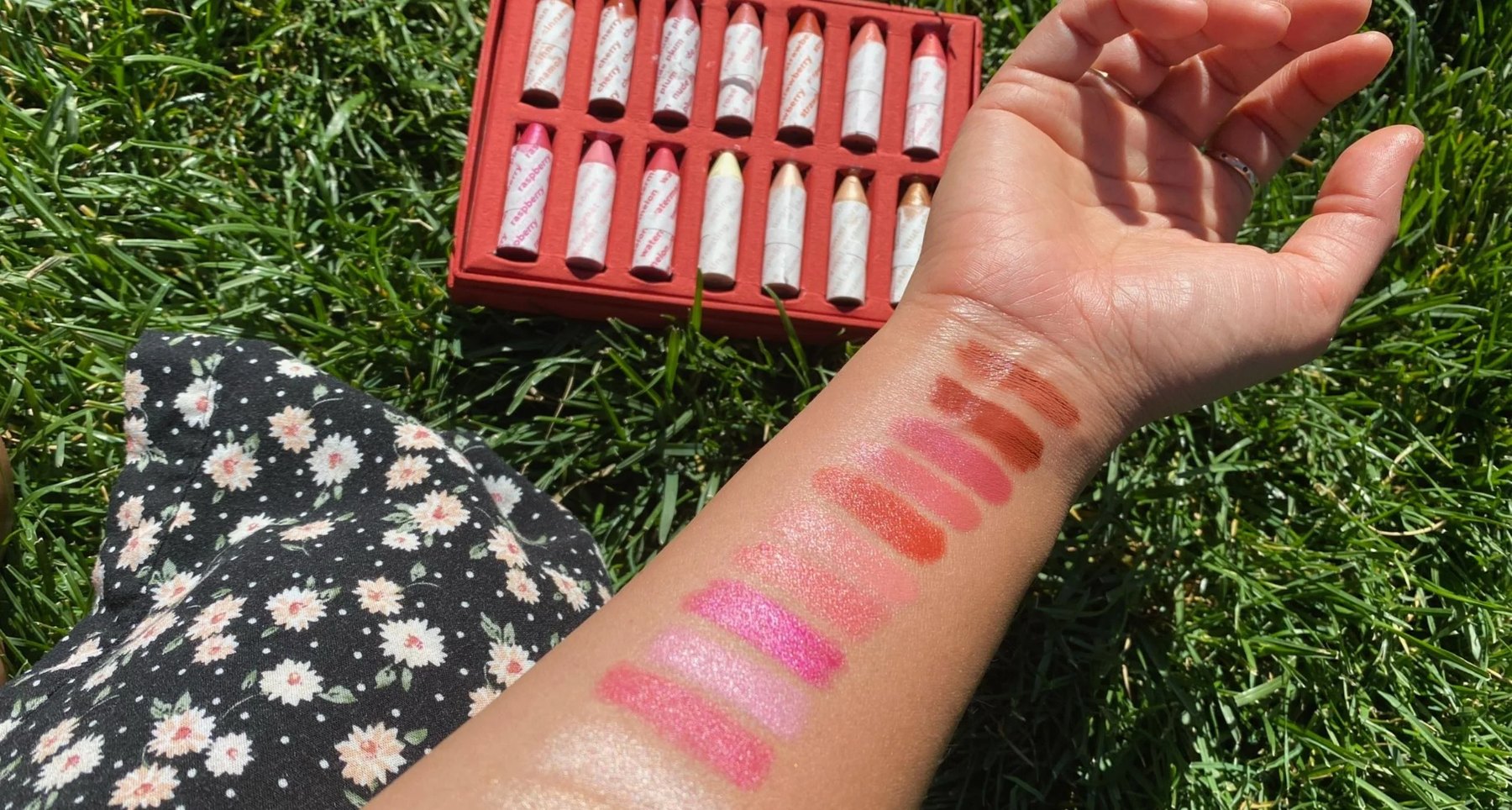
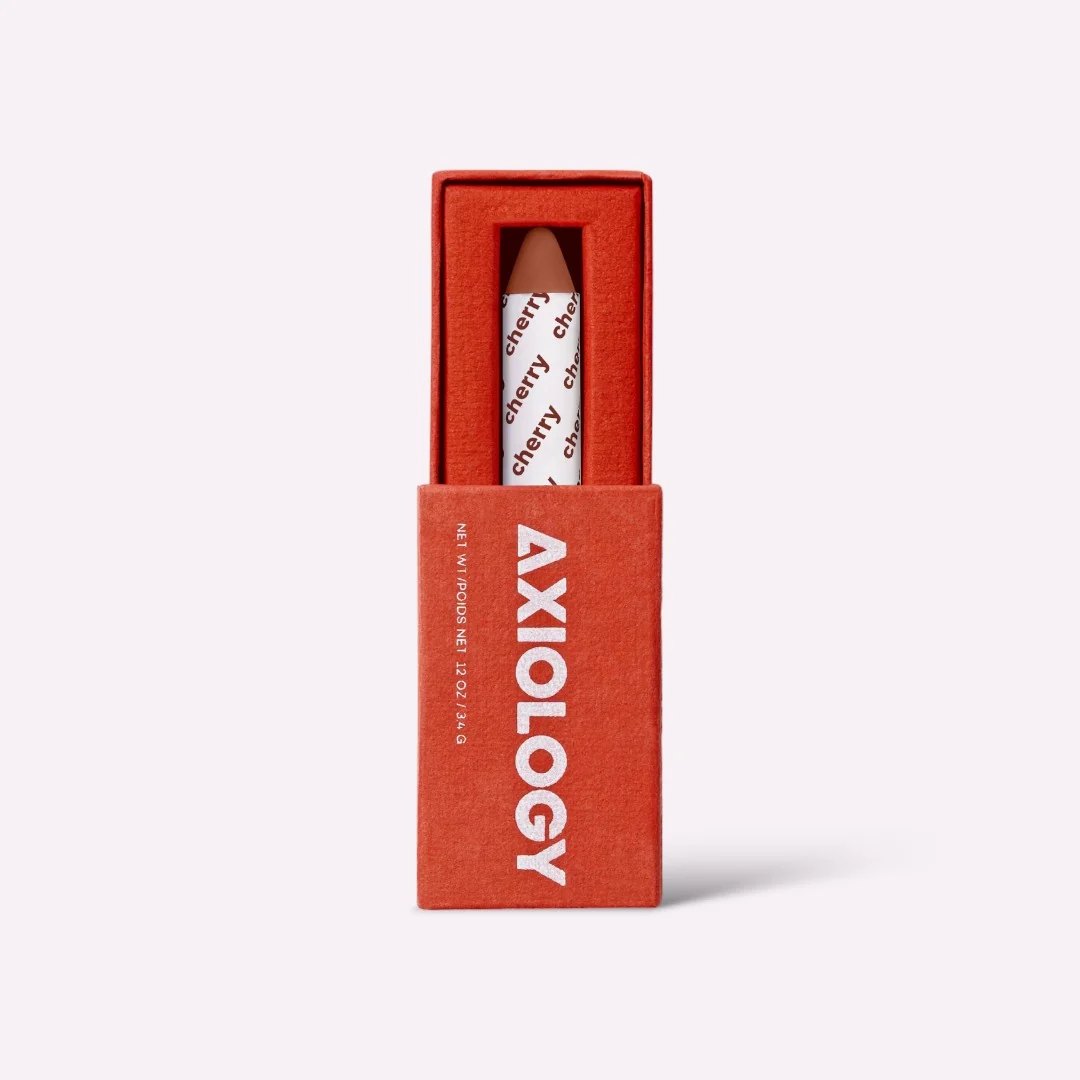
Undertone first, then depth, then finish. Cherry is a burnt berry with warm and earthy undertones. It reads serious on medium to deep skin and softens to a stain on fair skin. Nude Plum is a soft muted rose with a hint of plum. It is the safe meeting shade. Strawberry is clay orange with a jam finish. It wakes up warm undertones and suits cheeks best if lips run dry in air conditioning. Raspberry is a berry fuchsia rouge. It has the most pigment load, which means the amount of pigment packed into the base, so use a light hand on lids.
If you only buy one, match your lip undertone and let cheeks and lids follow. Cool to neutral undertones lean Nude Plum or Raspberry. Warm undertones lean Cherry or Strawberry. At hour eight, matte Balmies hold a lip line better than a cream, but a cream like our Color Cream Multi Stick looks fresher on dry cheeks at 4 pm. That is the tradeoff to swatch for in store.
Shade ranges get you praise and questions. Your foundations list four shades and Shape Sticks list Light to Deep, while Balmies run berry led brights. Where is the range strong today, and where does it stop short.
I will be direct. Our strength is edited color with clear undertones and multi use payoff. Balmies started as lip color and grew into lip to lid. Berries sell because they suit many depths and photograph well. Neutrals like Nude Plum do quiet work on cheeks. Highlighters like Champagne and Chestnut add light without glitter overload.
Foundation and contour are narrower than I want. Four Fungdation shades from very fair to light, and four Shape Sticks from Light to Deep, leave out deep cool and very deep warm shoppers. That is not lost on me. We formulate in house, which helps us extend thoughtfully, but each shade extension needs testing for undertone accuracy and stability. What would make it sell harder is filling those missing depths first, then adding mid range neutrals in Balmies that office wearers reach for daily. A good product with a short range still leaves people out, and I do not want that.
Your Bali boxes are made from island trash by a womens cooperative hand recycling paper for fair wages. How does that paper hold up in real bathrooms and bags compared with a carton.
Bali taught us a lot. We moved there for low costs early on and built a partnership that turned island trash into boxes. The cooperative hand recycles paper and earns fair wages. The boxes are kraft, sturdy, with black text. They feel tactile, not glossy. In a bathroom they hold up fine if they stay dry, like any paper carton. In a bag they scuff, which I accept. Scuffs show the material is honest.
The Balmie itself skips the carton for daily use. The paper wrapper is the pack. That is the point. Less to toss. Keep the red case in your pocket, tear as you go. Shoppers sometimes ask if paper is less hygienic. Hands should be clean when you blend, same as with any cream color. Brushes help on blemished skin. The box protects in transit. The wrapper protects in use. Simple by design.
Retail has moved from Etsy to Sephora online to Credo to 100 Ulta stores plus Wren and Wild in Bend. What sold through, what sat, and what did waitlists teach you about reorders.
Lip to lid minis sell through fastest. Singles at 18 dollars let people test undertone without committing to a set. Duo sets at 30 dollars move when shades are paired by undertone story, like a berry with a neutral. Trio sets at 46 dollars move at holidays. Restock, which is replenishment after a sell out, taught us to pour deeper on Nude Plum and Cherry and lighter on fashion brights.
What sat were shades without a clear job. A pretty color with no cheek or lid story lingered. Waitlist, which is the sign up list when a shade is out of stock, told us where demand lived. High waitlist plus fast sell through means raise the reorder. Low sell through plus returns means fix the description or the undertone label, not just the ad. Doors add reach, but reorders decide if a shade lives. I would rather have fewer shades that reorder than many that need rescue.
Looking at the next pours, what are you still trying to solve in payoff, feathering and sillage of scent, since you use no synthetic fragrance.
Payoff is strong. Feathering, which is color bleeding past the lip line, is the next test as we add creamier shades. Liner or a blotted edge helps now. We are working on hold without relying on drying resins. Sillage, which in fragrance means the trail scent leaves in air, is a useful word here too. Our sticks have only the light scent of oils and butters because we use no synthetic fragrance. Some shoppers love that quiet. Others miss a flavor cue. I prefer quiet and comfort.
We will keep batches small, keep testing undertones on real faces, and keep paper first. The goal is color that supports the look of smooth, cared for skin, with packaging that does not outlive us by centuries. If a shade cannot be worn three ways without fuss, it does not ship. That rule has saved us more than once.
Closing note from the desk
What stays after this conversation is process. A founder who learned base before color, who kept pouring in Bend when outsourcing would have been easier, and who dropped recycled tubes when paper asked more of the shopper but less of the planet. It reads as steady, not showy.
Axiology set out to make vegan, cruelty free color that feels good and leaves less behind. The Balmie is the clearest proof, one crayon for eyes, lips and cheeks at a fair price. The range still needs depth at the deep end. That is said plainly and as a plan, not a dodge.
Product spotlight
3-in-1 Balmie Crayon Singles, 18 dollars for 0.12 oz. A matte, long wearing crayon for eyes, lips and cheeks in shades like Cherry and Nude Plum. Tear the paper as you use it and store the nub in the red case. Press on with fingers or a brush and build in thin layers for comfort.
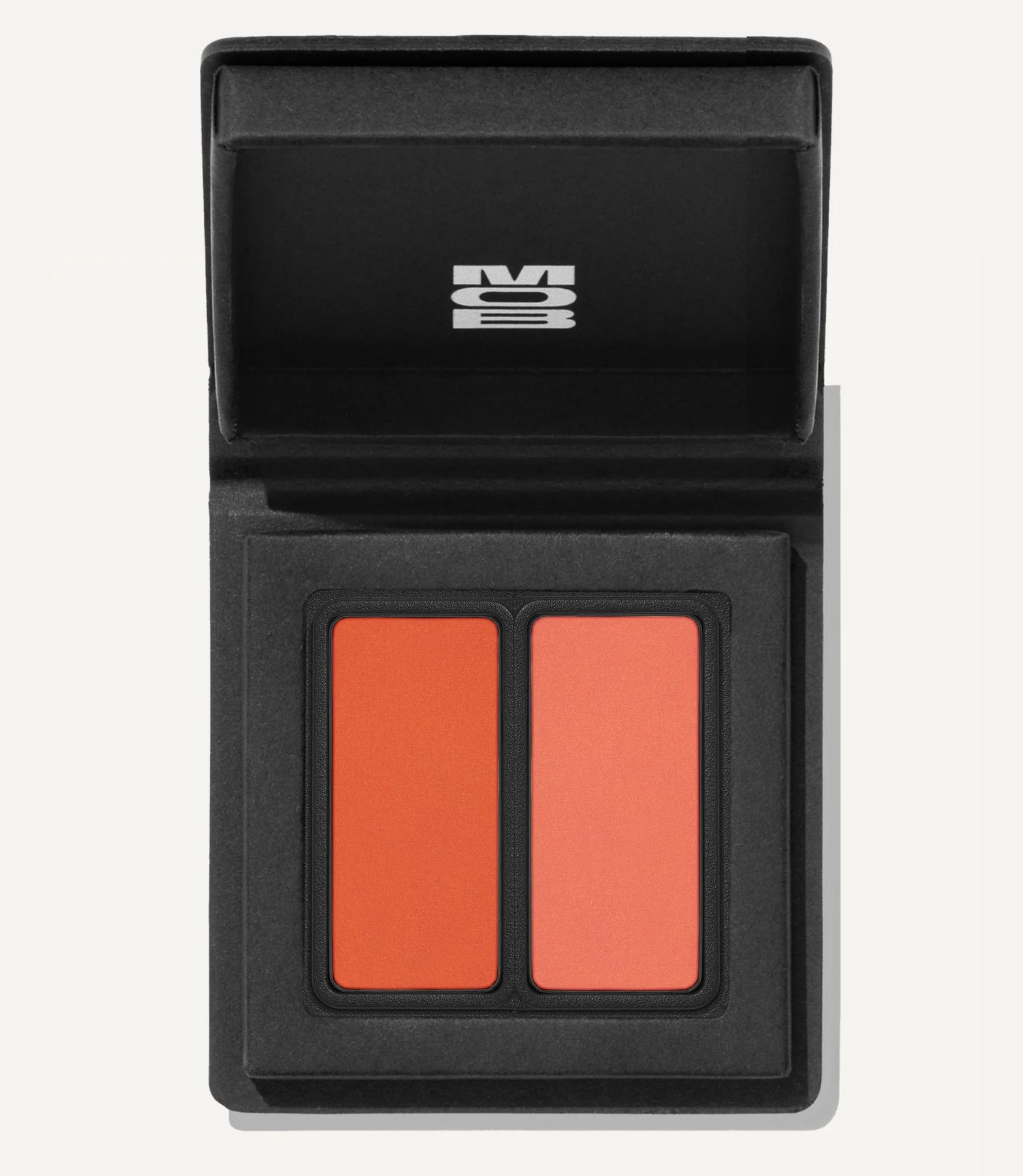
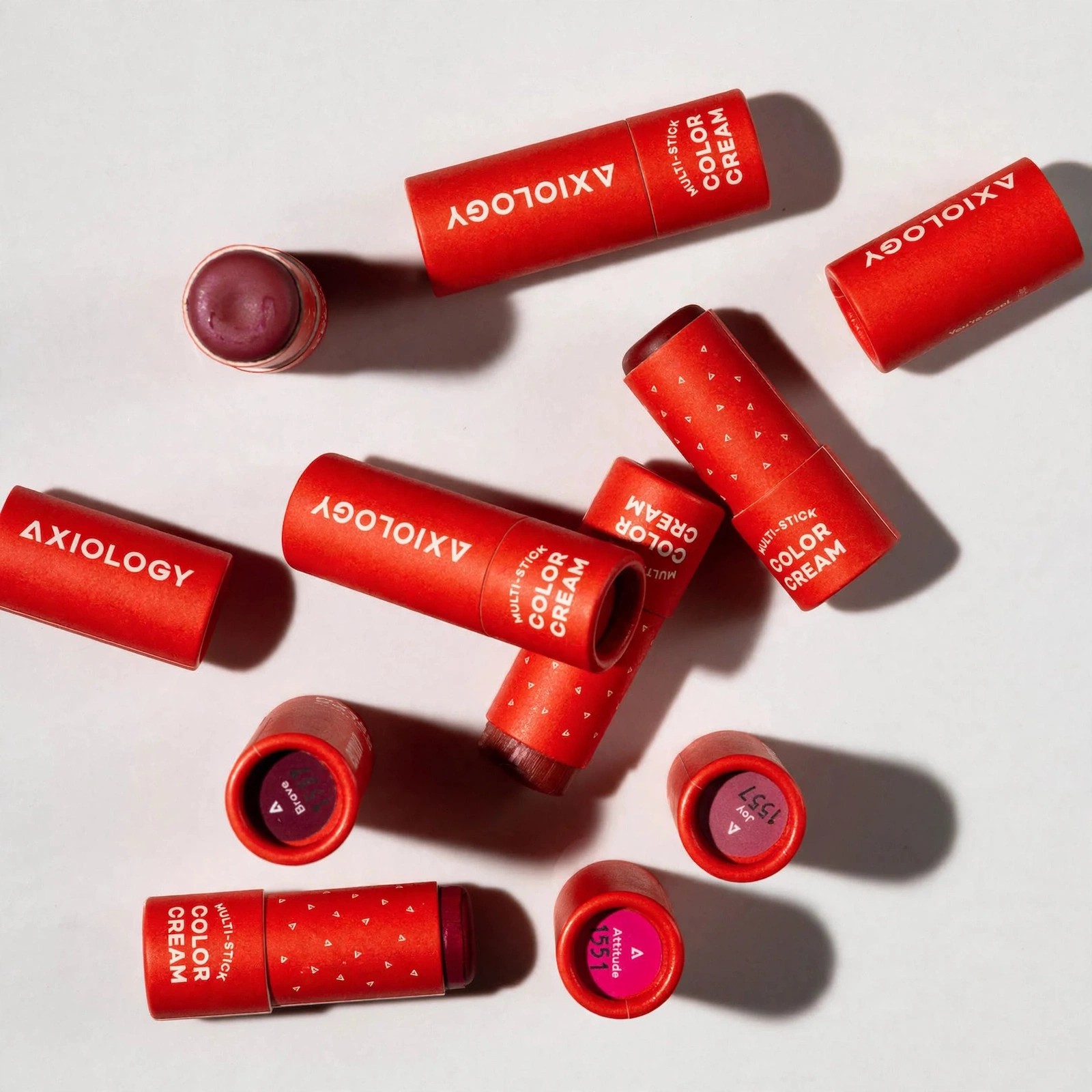
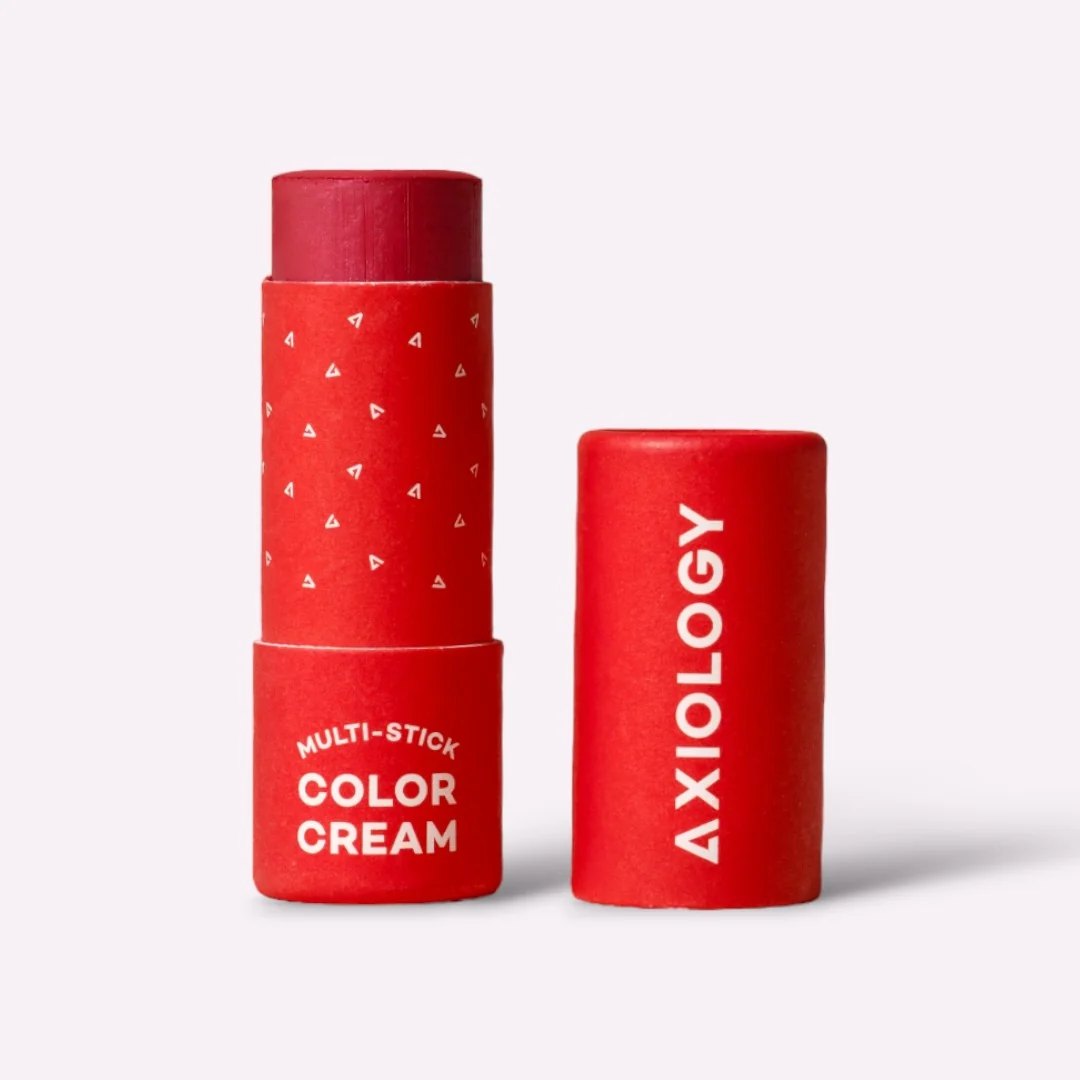
Color Cream Multi-Stick, 28 dollars. A creamier plastic free stick for eyes, lips and cheeks, suited to drier skin that wants cushion and sheen. Shades include Loyalty and Brave. Swipe then blend at the edges, blot lips for longer wear, and sheer out on cheeks for a soft finish.

Kendra Pruitt
Kendra produces the founder interviews at Gloss Report: the research, the question lists, the follow-ups. She spent five seasons assisting session artists backstage in New York, so her first question is usually about wear time under hot lights.
More from Kendra Pruitt →