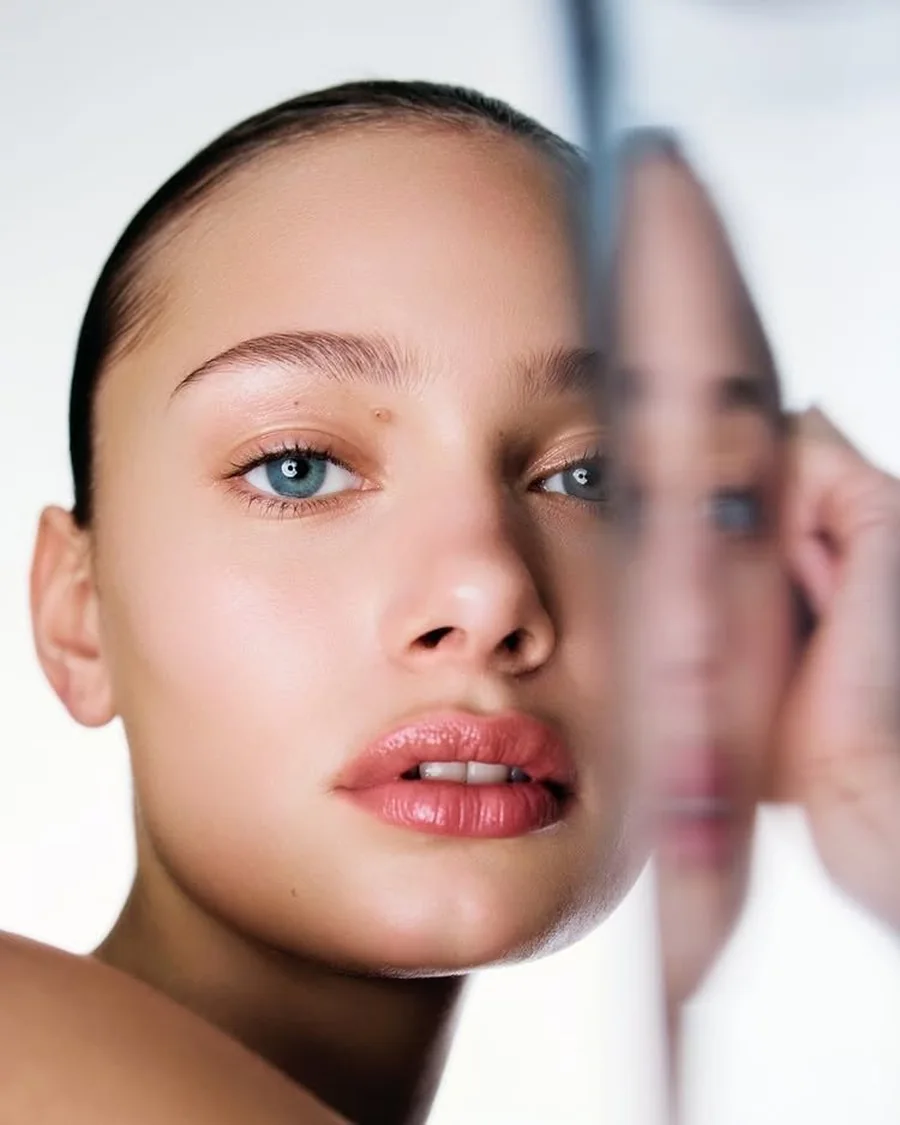
Most lipstick returns happen for the same reason. The shade looked right in the tube and wrong on the face, then slid, bled or vanished by midday. Matching undertone to red and nude families and pairing pigment load with liner and thin layers changes that outcome.
Find your undertone and your red family
Start with the underside of the arm in daylight. Blue or purple veins suggest cool tone, green veins suggest warm tone, and a mix suggests neutral tone. Add two retail floor cues. Cool undertones often have blue, red or pink hues and may burn easily, suit silver jewelry, and see red lipstick look pink. Warm undertones may appear golden, peach or tan and are advised to try orange or chilli red.
That gives you a starting family, not a final shade. Blue based red shades are described as flattering for cool complexions and as helping teeth appear whiter. Warm skin tends to sit well with orange or chilli reds, which pick up the gold in skin instead of fighting it. Neutral skin can usually wear across the range, which is useful when a brand drops a red capsule and you want to know which one to swatch first.
Artists often work by counteraction. Blue toned nudes are recommended on warm skin and peachy or orangey nudes against cool undertones, a glow boosting trick that keeps skin from reading sallow or ruddy next to strong lip color. The same logic helps with red. If a blue red looks too stark, try a slightly deeper version in the same family before switching families. Undertone stays the same while depth changes, and depth is what makes a red wearable for day or for late shifts under store lights.
Swatch on lips or just inside the lower lip when testers allow, then step into daylight. Wrist swatches show payoff, which means how much color a formula lays down in one pass, but lips show undertone interaction. Keep notes by family, blue based or orange based, rather than by shade name. Names repeat across launches while families stay useful season after season.
Find your nude without washing out
A good nude is close to skin, only darker. Ideal nude should be very slightly darker than skin, with a hint of pink or brown. That small shift in depth keeps lips defined. Going too light with nude shade can leave skin looking flat and washed out, a common reason nudes get returned as universal when they suit only a narrow band of tones.
Test three hues in the same family on hydrated lips, not on the hand. Pick one pink brown, one truer brown and one peach brown in a finish you will actually wear. Finish changes perceived depth. A gloss reads lighter than the same pigment in a bullet, which glides and swipes on, with satin bullets giving bold payoff and creamy texture. A tint reads lighter still, since it is built as a wash rather than an opaque coat.
Wear your usual base and blush for the test. Nude interacts with everything else on the face, and bare skin testing often leads to a shade that disappears once foundation goes on. Check the vermilion border, the sharp edge where lip meets skin, for a clean line. If the edge blurs into skin, the shade is likely too close in lightness. If lips look separate from the face in a pale mask, it is too light.
For glow, borrow the counteraction idea again. Blue toned nudes are recommended on warm skin and peachy or orangey nudes against cool undertones. On warm skin, a cooler nude can neutralize excess gold. On cool skin, a little peach can warm without turning orange. Neutral tones can usually choose by depth first, then by whether pink or brown looks more natural against teeth and gums.
Pick bullet, gloss, liner or tint for pigment and routine
Think in terms of pigment load and opacity, then match the format to the day. Traditional bullet lipstick glides and swipes on, with satin bullets giving bold payoff and creamy texture. That makes it the choice for opaque reds and for nudes where you want lips to hold their own against eye makeup. Sheer Strength Hydrating Lip Tint is listed as providing 24 hours of hydration with sheer balmy color. Listing Sheer Strength Moisturizing Matte Lip Tint promises 48 hours of hydration and a blurred matte look. Impact-FULL Smoothing Lipstick is listed with up to 8 hours of staying power. Treat those numbers as brand claims from wear panels rather than promises for a day of coffee, meetings and reapplication.
Gloss gives sheer shine and lower opacity, which suits a bright red worn softly or a nude worn for hydration and light. The trade is wear time, which means how long color stays even before fading, and transfer, which means color moving onto cups, masks or skin. Matte and liquid lipstick formulas stay put better than glossy options because they dry down and grip. Dry-down is the point when a liquid sets from wet to film. That grip helps with transfer but can feel tight by late afternoon.
Lip liner shapes lips, defines cupids bow, and can be used to fill entire lip as a base. Liner adds grip under any format, sharpens the border and lets you adjust shape without changing the bullet shade. If edges migrate, layer topper or oil only at center. Keeping slick product away from the perimeter reduces slide into fine lines while keeping shine where light hits.
Dupe culture gets this part right. Two bullets can share a shade name family and differ completely in pigment load. Check opacity in one swipe, then wear time needs, then finish. A sheer red gloss for errands, an 8 hour satin for workdays and a tint for no makeup days can all live in one kit without duplication.
Prep, line and build thin layers
Feathering, color slipping into lines around the mouth, usually starts with too much slip at the edge. Cream formulas with high oil content slide easily into surrounding lines. Lightweight balms with beeswax or lanolin hydrate without slick residue, while heavy greasy balms can worsen feathering. The fix is thin product, placed well, given time to set.
Exfoliate gently and wipe away residue so liner can grip. Apply a thin balm layer and let it sit. Balm should sit 5 to 10 minutes and remaining residue should be blotted before liner or lipstick. That pause matters more than the brand of balm. Lips should feel supple, not coated.
Add a thin primer at the vermilion border only if you use one, and let it dry 30 to 60 seconds. Advice on liner placement splits, with one take placing it just outside the natural edge and another placing it just inside to control migration. For feather prone lips, staying just inside the edge is the safer test. Outline, then fill. Filling entire lip surface with liner creates a grippy base that holds lipstick longer. It also keeps color even as the top layer wears, so fading looks intentional rather than patchy.
Applying lipstick in thin layers with a brush and blotting between coats limits migration. A brush places less product than a direct swipe and reaches the corners cleanly. Blotting removes oil without removing pigment, which lowers slide while keeping payoff.
Test feathering, transfer and wear time
Test on real lips on a normal day, not only on the back of the hand. Talk, drink, eat and check at set times. In a personal test, gloss without liner needed touch up after 1 hour and showed bleed near mouth corner, while with liner it reached 3 hours before feathering. After that claim, I tested cream lipstick for 7 hours and through pizza without liner, and for 7 hours through three smaller meals with liner with sharper edges. By contrast, I tested liquid lipstick without liner where it cracked around 6 hours and faded after oily dinner by 8 hours, while with liner cracks did not show natural lip color. Liner did not always add hours, but edges stayed sharper and fading looked more even.
Use a repeatable method. Apply with brush in thin coats, blot between coats with single ply tissue. Pressing single ply tissue over lips and dusting translucent powder through it, then reapplying light lipstick, is used to set color. The tissue diffuses the powder so it sets without caking. A sponge press works for a softer set. Mist light setting spray sparingly if you use spray, and keep it away from direct lip saturation.
Keep gloss away from edges during the test. Apply bullet or liner fully to the border, then place gloss or oil only at the center of the lower lip and press lightly. That gives shine without feeding migration at the corners, where bleed near the mouth corner shows first. Note what you ate, since oil breaks down film faster than water. A matte that survives office hours may still fade after an oily dinner, which says more about the meal than the formula.
Takes on which matte or satin type feathers least split, with one side favoring satin and liquid formulas and another ranking wax heavy creamy formulas low for lined lips. Skin texture, lip lines, climate and store heating all play a role. Your own timed test across two days, one lined and one unlined, tells you more than any claim about doors or sell-through, which tracks how fast stock sells, or waitlists and restocks.
If lips react to fragrance or lanolin
Stop and simplify when lips sting, itch, peel or crack at the borders. Allergic contact dermatitis of lips classically appears 48 hours after exposure, ranging from hours to one week, and may last up to 8 weeks. That delay makes patch testing and supervised avoidance important, because the trigger may have been used days earlier.
Most common lip allergens are fragrance additives that also serve as flavorings in balms, toothpaste, mouthwash, gum and makeup. Lanolin in moisturizers such as Aquaphor can trigger allergic reactions, along with preservatives and additives. Lanolin literature describes a paradox where the same ingredient protects intact skin and may trigger reactions on damaged skin, with limited standardized studies. A 1950 to 2024 review found lanolin is derived from sheep fleece and became widely used after an 1882 centrifugal production method. History explains why it appears so widely, not whether it suits your lips.
During an 8 week avoidance trial, guidance lists using only pure Vaseline without fragrance or Vanicream Ointment, plus 100 percent coconut oil or shea butter. That means pausing fragranced balms, gum, mints and mouthwash during the healing trial, unless your clinician advises otherwise. Once healed, guidance suggests trying lip makeup without fragrance and flavorings including botanicals, formaldehyde, lanolin, oxybenzone or methylisothiazolinone. Bring full ingredient lists to the appointment, including balm, toothpaste and lip color, and ask what to reintroduce first and how to track response.
See a dermatologist or allergist for persistent swelling, spreading rash, oozing or pain, or when symptoms return with each new product. Evidence does not show which exact ingredient causes a given reaction without testing, or which primer base suits sensitive lips over time. A short supervised trial answers more than swapping through new launches.
The checklist
Sources and further reading
- How to Stop Lipstick from Feathering Instantly · lipstickqueen.com
- Lip Allergic Contact Dermatitis Rajani Katta MD · doctorkatta.com
- How to Find Your Perfect Nude Lipstick · maxfactor.com
- What Are The Different Types of Lip Products? · thrivecausemetics.com
- Lipstick Application To Prevent Feathering · makeupdr.com
- Hypersensitivity to Lanolin: An Old–New Problem · pmc.ncbi.nlm.nih.gov
- Discover The Red Lipsticks For Your Skin Tone Charlotte Tilbury · charlottetilbury.com
- I Tested Lip Liner With 3 Different Lip Products To See How It Affected Their Staying Power — PHOTOS · bustle.com
For information only, not medical advice. Shade and wear notes reflect our testers' skin; patch test anything new, and check the full ingredient list if you have allergies or sensitive skin.

Heather Castellan
Heather looks after the brands Gloss Report works with and makes sure every sponsored page says so. She was a colour cosmetics buyer for seven years, which is where she learned how a shade range gets cut before it ever reaches the shelf.
More from Heather Castellan →